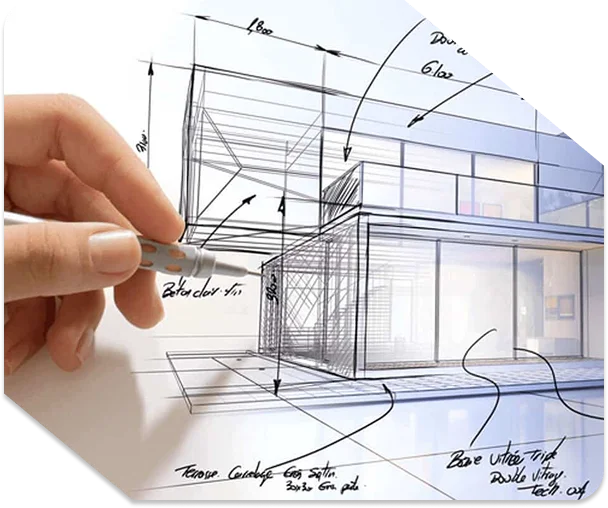
Our Sitework Estimating Services Designed to Help You Win More Bids
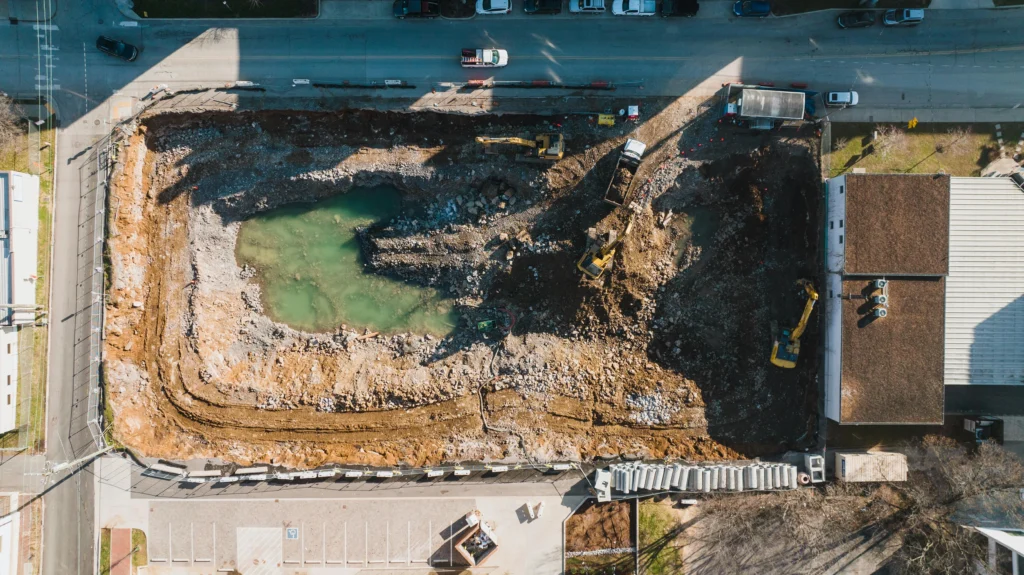
The success and the financial safety of any capital project begins well below the surface. Sitework (CSI Division 31) encompasses the most volatile and risk-heavy phases of construction: demolition, mass excavation, precision grading, trenching, and complex underground utility infrastructure. Unlike vertical construction, where materials are uniform and predictable, sitework deals with the natural variability of the earth.
Errors in this scope do not just mean a budget overage; they can stall an entire project before the first foundation is poured. Unforeseen soil conditions, miscalculated export volumes, or clashes between deep utility lines can lead to massive change orders and paralyzing schedule delays.
At Aris Estimating, we provide Definitive Sitework Estimating Services that transform geological ambiguity into financial certainty. We leverage advanced Digital Terrain Modeling (DTM) software and integrate geotechnical data to deliver granular, three-dimensional takeoffs of all earthwork and utility components. We empower General Contractors, Civil Contractors, and Developers to bid competitively, manage costs effectively, and mitigate the high financial and operational risks inherent in site preparation.
I. The Sitework Challenge: Quantifying the Invisible
The primary risk in Division 31 is the accurate quantification of disturbed earth and the complexity of underground utility installation, both of which are highly sensitive to site conditions and regulatory demands.
| Component Group | Primary Cost Driver | Critical Quantification Detail | Risk of Inaccuracy |
|---|---|---|---|
| Roofing Systems | Membrane and Insulation Layers | Square footage of membrane, tapered insulation layout, complex perimeter flashing, and penetration wraps. | Water Intrusion/Catastrophic Leakage (if membrane detailing or flashing is missed); High Energy Bills. |
| Wall Barriers | Continuity and Transition Detailing | Square footage of air/vapor barrier, linear footage of specialized transition membranes (at windows/doors). | Moisture Migration/Mold (if barrier is breached); Air Leakage/Code Failure (missing blower-door test). |
| Firestopping | Life Safety Compliance | Specific volume/length of firestop sealant by penetration type and UL/cUL assembly number. | Fire Spread Risk (if firestopping assembly is incorrectly priced or missed entirely). |
II. Earthwork and Grading: The Science of 3D Volumetric Certainty
Earthwork is the highest cost-risk area due to volume uncertainty. A 2D assessment is insufficient; we utilize 3D Digital Terrain Modeling to virtually construct the site before a single machine is mobilized.
A. Digital Terrain Modeling (DTM) and Mass Balance
We import your CAD files and topographical surveys to create a “surface-to-surface” comparison between the existing site conditions and the proposed design.
- Precise Cut and Fill: We calculate the exact volume of material that must be cut (removed) and filled (placed) to reach the design subgrade.
- Net Import/Export Analysis: Crucially, we determine the Mass Balance identifying if the site has a surplus of dirt (requiring expensive trucking and disposal fees) or a deficit (requiring the purchase and import of fill). Knowing this “Net” number is often the difference between winning and losing a bid.
B. Geotechnical Integration: Soil Mechanics
We do not treat all dirt equally. Our estimators analyze the project’s geotechnical report to apply accurate engineering factors:
- Swell and Shrink Factors: We adjust volumes based on how the soil reacts to excavation (swell) and compaction (shrink). For example, excavating 1,000 CY of bank clay might result in 1,200 CY of loose material to truck away.
- Unsuitable Material: We quantify topsoil stripping volumes and, critically, the necessary over-excavation for unsuitable soil, muck, or rock. We segregate these volumes because rock excavation often costs 5x-10x more than standard dirt excavation.
III. Underground Utilities: Managing the Maze
Underground utilities represent a dense, complex network that requires meticulous linear measurement and component counting.
A. Wet Utilities (Sanitary, Storm, Water)
- Gravity Systems (Sanitary/Storm): We perform linear footage takeoffs of pipe runs separated by diameter ($4″, 8″, 12″$, etc.) and material (PVC, RCP, Ductile Iron). We quantify all required structures including manholes (by depth), catch basins, headwalls, and curb inlets.
- Pressure Systems (Water/Fire): Detailed takeoff of domestic water and fire loops, including thrust blocks, gate valves, hydrants, post indicator valves (PIV), and complex meter vault assemblies.
B. Dry Utilities (Electrical, Data, Gas)
- Duct Banks: We quantify excavation and concrete encasement volumes for electrical and telecommunication duct banks.
- Conduit and Trenching: Linear footage of trenching required for gas lines and site lighting, ensuring the cost of bedding sand and warning tape is included.
C. Trench Safety and Logistics
Trench work carries significant safety and labor risks. We quantify:
- Depth Brackets: Trenches are categorized by depth (e.g., $0-4’$, $4-8’$, $8-12’$), as deeper trenches require significantly heavier equipment and slower production rates.
- Shoring and Shielding: Quantification of trench boxes or engineered shoring systems required by OSHA for depths exceeding 5 feet.
IV. Site Demolition and Erosion Control
Before new work begins, the site must be cleared and compliant.
- Demolition: We quantify the removal of existing structures, footings, asphalt pavement, and curbs by volume or tonnage, factoring in dump fees and recycling requirements.
- Clearing and Grubbing: Acreage calculation for vegetation removal, including tree counts for specific removal pricing.
- Erosion and Sediment Control (ESC): Quantification of all temporary and permanent ESC measures required by the EPA and local jurisdictions. This includes linear footage of silt fencing, count of inlet protection devices, stabilized construction entrances, and square footage of temporary seeding or erosion control blankets.
V. The Strategic Value of Aris Estimating
Partnering with Aris Estimating for Division 31 gives you more than just numbers; it gives you a strategic operational plan.
For Civil Contractors and Excavators
We provide the operational data you need to plan your fleet. By knowing the exact CY of movement and trench depths, you can accurately budget for the right size of excavators, the number of dump trucks required for export cycles, and the crew size needed for pipe installation.
For General Contractors and Developers
- Risk Transfer: We identify high-risk areas like potential rock clashes or excessive export volumes allowing you to write tighter contracts with your subcontractors or negotiate “unclassified excavation” clauses more effectively.
- Budget Defense: Our detailed DTM reports provide the visual and numerical evidence needed to defend your budget to owners or banks, explaining exactly why the sitework costs what it does.
- Permitting Support: Our detailed breakdown of impervious vs. pervious surfaces and soil movement volumes streamlines the application process for grading and environmental permits.
Ready to anchor your project in financial certainty from the ground up? Don’t let the unknowns of the site undermine your profit. Partner with Aris Estimating for Sitework estimates defined by volumetric precision and risk mitigation.