Our Drywall & Framing Estimating Services Designed to Help You Win More Bids
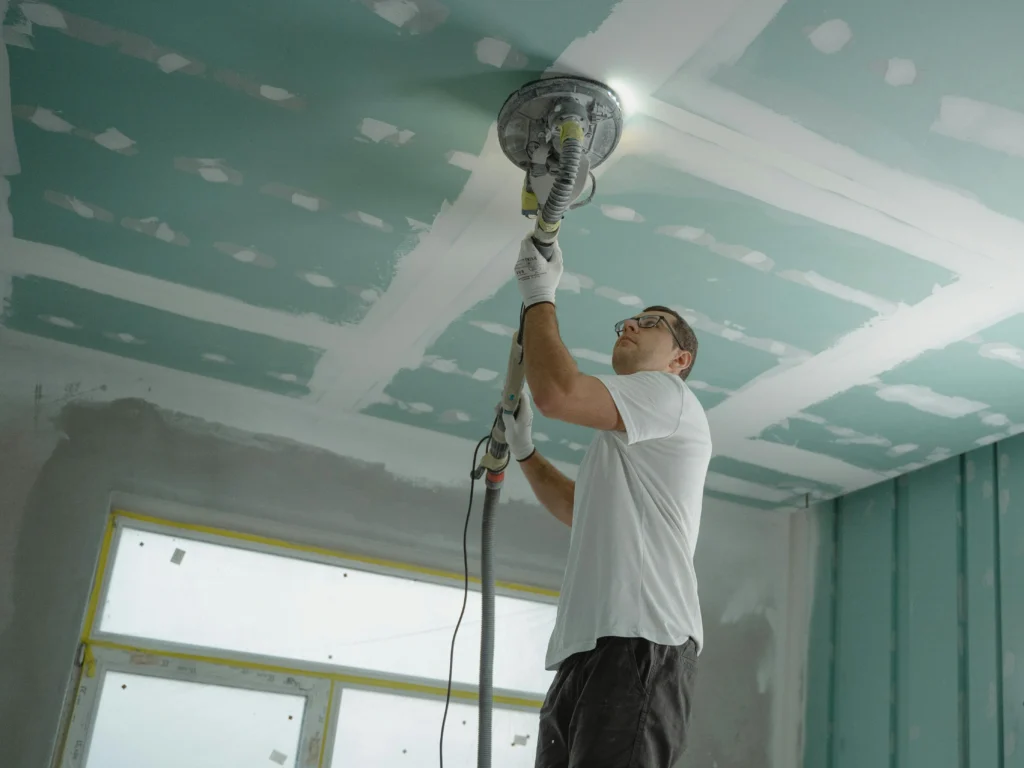
In the vast majority of commercial and residential construction, drywall (gypsum board) and its underlying metal framing constitute the defining volume of the interior scope. While often viewed as a commodity trade, Drywall and Metal Stud Framing (Division 09 20 00) operate on notoriously thin margins. The difference between a profitable project and a loss lies almost entirely in the accuracy of the takeoff and the strict management of material waste and labor productivity.
Relying on simple “square footage of wall area” calculations is a recipe for disaster. It fails to account for sheet optimization (ordering 12′ boards vs. 8′), waste complexity (cutting around headers/soffits), stud gauge requirements, and the critical labor differences between a standard fire-tape and a pristine Level 5 finish.
At Aris Estimating, we provide Definitive Drywall & Framing Estimating Services. We utilize advanced digital quantification tools to deliver granular, assembly-based takeoffs. We empower Drywall Subcontractors, General Contractors, and Remodelers to bid with razor-sharp precision, optimize board layouts, and secure contracts without leaving money on the table.
I. The Drywall Challenge: Volume, Waste, and Finish Quality
The primary risk in drywall estimating is the disconnect between the “net surface area” and the actual material and labor required to construct it.
| Cost Component | Primary Measurement | Critical Quantification Detail | Risk of Inaccuracy |
|---|---|---|---|
| Gypsum Board | Sheet Count (by Type/Length) | Board Optimization (using 12' sheets to reduce joints); Type Specificity (Type X vs. MR vs. Impact). | High Waste (excessive drops); Code Failure (using standard board on fire walls). |
| Metal Framing | Linear Feet / Piece Count | Stud Gauge & Flange (20ga vs 25ga); Deflection Tracks; Soffit Complexity. | Structural Failure (undersized studs); Labor Overrun (framing complex soffits/clouds). |
| Taping & Finishing | Square Footage (by Level) | Level of Finish (Lvl 3 vs Lvl 5); Corner Bead Count (bullnose vs. square); Ceiling Height. | Labor Blowout (underestimating skim coating time); Aesthetic Disputes. |
II. Specialized Takeoffs: The Complete Wall Assembly
We approach the wall as a complete system, quantifying every layer required for a compliant installation.
A. Metal Stud Framing (The Skeleton)
For commercial projects, the framing estimate is just as critical as the board.
- Stud and Track Detail: We quantify studs by height, gauge (thickness), and flange width based on structural height limitations and wall schedules. We separate standard partition walls from chase walls and heavy-duty structural shaft walls.
- Specialized Hardware: Quantification of slip tracks (for deflection), backing plates (for cabinets/handrails), and bracing.
- Complex Geometries: We pay special attention to soffits, bulkheads, and light coves, quantifying the complex framing labor required to build these architectural features, which is often 3x-4x the cost of a flat wall.
B. Gypsum Board (The Skin)
We differentiate board types to ensure code compliance and accurate material costing.
- Type X and Fire Ratings: Precise quantification of 5/8″ Type X board for fire-rated corridors and demising walls.
- Moisture and Impact Resistance: Separation of Moisture Resistant (MR/Green/Purple) board for wet areas and Impact Resistant/Abuse Resistant board for high-traffic corridors (e.g., in schools or hospitals).
- Shaftliner: Specific quantification of 1″ shaftliner panels for elevator cores and stairwells.
C. Taping and Finishing (The Art)
Finishing is the most labor-intensive portion of the scope.
- Levels of Finish: We separate square footage based on the specified Level of Finish (1-5). A Level 5 finish (skim coat) requires significantly more compound and sanding labor than a Level 3 (texture ready).
- Corner Beads and Trims: Detailed count of corner beads (bullnose, paper-faced metal, vinyl), tear-away beads (L-bead) for window returns, and expansion joints for long wall runs.
III. Strategic Methodology: Optimization and Logistics
Our methodology focuses on how the job will actually be built, translating plans into purchasing logic.
1. Board Optimization and Waste Logic
We don’t just calculate square footage; we analyze the wall dimensions.
- Length Optimization: If a wall is 9 feet high, we estimate 10-foot or 54-inch boards (if available) to minimize horizontal joints (butt joints), which are the most labor-intensive to finish.
- Scrap Management: We apply variable waste factors. A simple warehouse wall might have 5% waste, while a chopped-up apartment layout with many windows might require 15% waste.
2. Ceiling Complexity Factors
Working overhead costs more.
- Height Factors: We categorize ceiling work by height (e.g., $0-10’$, $10-14’$, $14’+$). This allows you to budget for scaffolding, scissor lifts, and slower labor productivity rates required for high work.
- Grid vs. Hard Lid: We clearly distinguish between Acoustical Ceiling Tiles (ACT) and hard-lid drywall ceilings.
3. Insulation and Sound Proofing
- Sound Attenuation: Quantification of sound attenuation batts (SAB) and acoustical sealant (caulk) for STC-rated partitions.
- Thermal Insulation: Square footage of thermal batts or rigid insulation for exterior walls.
IV. Strategic Benefits for Industry Partners
Our services are tailored to the specific pressure points of the drywall trade.
For Drywall Subcontractors
Bid with Labor Confidence. The biggest risk in drywall is underestimating the labor for finishing and high work. Our detailed breakdown of Levels of Finish and height categories gives you the data to price your labor accurately, ensuring you don’t win a job that loses money on the finish.
For General Contractors
Scope Verification. We ensure that the drywall bid covers everything. Our takeoff acts as a checklist to verify that your subs have included the fire-caulking, the deflection track, the access panels, and the correct board type for the bathrooms.
For Lumber/Supply Yards
Precision Stocking. Use our material lists to provide precise quotes to your customers. We can break down the list by floor or “zone,” allowing for accurate stocking and scattering delivery logistics (e.g., booming specific board lengths to the 2nd floor).
Ready to smooth out your bidding process and frame up more profit? Partner with Aris Estimating for drywall takeoffs defined by detail, finish quality, and waste control.